
Are ThermoWood® Timbers Better Suited To Charring Than Natural Timbers?
Discovering which timbers are best suited to charring is an important factor to consider when looking for external cladding in the UK. This is due to the constantly changing climate and high moisture levels that we experience.

Generally, all-natural timbers contain natural resins, sugars and impurities with moisture levels of around 16-18% after they have been kiln-dried. Depending on their end use, they can be kiln-dried down to 12% for internal use, which helps to stabilise the material. However, 16-18% will be the norm for external cladding, and they will expand during the wetter winters and contract in the drier summers. Historically, the UK has used chemically treated timber for various exterior projects like Cladding, Decking, fencing and construction timbers using softwood pine and spruce.
Since the UK banned Russian Siberian Larch, it was replaced with East Coast Scottish-grown Larch and Douglas Fir. Due to a cold, drier climate, it produces a denser and more durable species than in other parts of the UK that’s free from chemical preservative treatment.
Technology brought the ThermoWood process that, through high heat and steam, removes all of the resins, sugars and impurities, curing the timber at 6% moisture content. This provides an extremely durable and stable timber species, with the process applied to Softwood Pine and various Hardwood species like Ash that would otherwise perish in an external environment, thereby introducing new timber species into an external climate and reducing the need to use Amazonian timber species, ticking several environmental boxes.
Traditionally, to prevent the natural greying effect from UV and weather exposure that all timbers succumb to over time, the material is usually painted or regularly UV oiled. However, over time it
Why did the paint peel/flake off?
The predominant factor causing the paint to peel and flake off all-natural timbers is not down to the actual paint being applied. Instead, it is due to the timber that the coating was applied to. Lower-cost timbers such as Knotty Pines, Larch and some Cedars are prone to large degrees of movement. Such as swelling, shrinking, cupping, and splitting. This is because the timber takes on moisture and later tries to expel it, and if it happens too quickly, the surface grain opens, therefore looking like the timber has split. Commonly known as grain-checking. The natural preservative oils in Cedar also reject some coatings.
Consequently, the movement affects the painted skin as it cannot accommodate the same movement, leading to surface cracking and eventually causing a breakdown of the surface material.
The Birth of Charred Timber and Finishes.
Eventually, our findings revealed that all the timbers that had been charred in their all-natural state had suffered varying amounts of degradation. From board movement (swelling and cupping) to the peeling and flaking away of the charring itself. Exposing the natural timber underneath. Experimenting with different sealers was also important, as we needed to retain the surface soot from being washed off and onto other surfaces. Also handling during installation, the surface needed to have a degree of protection.
We also found that a heavily charred surface is the only surface that naturally becomes resistant to UV degradation. This is due to the thicker carbon layer created by the charring process. This layer does not have flexibility and is more delicate than other charred surfaces. If the timber in this case shrinks or expands with the varying weather conditions, then it will crack. Permitting rain to penetrate beneath the surface, causing the surface char to peel off if not addressed promptly.
Findings
Eventually, our findings revealed that all the timbers that had been charred in their all-natural state had suffered varying amounts of degradation. From board movement (swelling and cupping) to the peeling and flaking away of the charring itself. Exposing the natural timber underneath. Experimenting with different sealers was also important, as we needed to retain the surface soot from being washed off and onto other surfaces. Also handling during installation, the surface needed to have a degree of protection.
We also found that a heavily charred surface is the only surface that naturally becomes resistant to UV degradation. This is due to the thicker carbon layer created by the charring process. This layer does not have flexibility and is more delicate than other charred surfaces. If the timber in this case shrinks or expands with the varying weather conditions, then it will crack. Permitting rain to penetrate beneath the surface, causing the surface char to peel off if not addressed promptly.
Positive Results
Positively, the timbers that did not replicate the same signs of fatigue as the charred all-natural timbers were those that had been thermally treated. Since the thermal process removes the natural resins, sugars and impurities that are normally present in all timbers. These thermally modified timbers cured at 6% moisture content, effectively creating a very stable, low-moisture-resistant board. In turn, it provides high durability and resistance to movement throughout the board.
Larch, Cedar, Douglas Fir.
There are four very good reasons as to why we do not char Larch, Cedar and Douglas Fir, along with all other all-natural timbers that are to be used for external cladding.

Images clearly show the distortion and the difficulty of the profiles going together. You will find that there are a limited number of profile options for this reason. The grooves on the underside are called stress relief grooves, but they are generally useless, as they would need to be deep enough to cut the grain and prevent cupping, but that would then weaken the board.
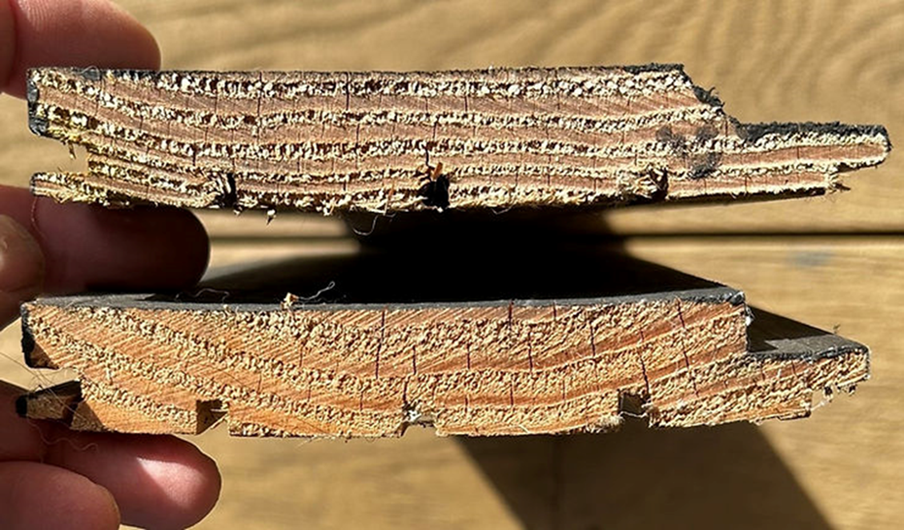
The moisture content of these timbers is generally high, between 16-18%. Consequently, when you apply intense heat to one surface rapidly, the board surface will constrict, causing the board to cup. In contrast, the moisture content in ThermoWood® is only 6%; therefore, no distortion will occur during charring.
Due to the presence of natural tannins, resins, sugars, and impurities, the intense heat applied during the charring process draws these to the surface, and the resins bubble up, disrupting the surface finish. None of these is present in ThermoWood’s®.
The action of charring the surface of timber naturally makes that surface become brittle and therefore more delicate. Applying this charred surface to a timber that is prone to expansion, like Larch, means that the brittle charred surface will crack under the movement of the timber, and over time, deterioration of the surface will be inevitable.
Cladding profiles that have a T&G type of profile where they interlock together also require a flat board to do so. If the boards cup, this is not possible, which is why you are limited to the profiles available when purchasing charred Larch or other natural timbers. With ThermoWood® timbers, you are unrestricted by the profiles you can have, which gives you complete design freedom.
With all Charred finishes, they require a surface UV sealer that repels the rain and helps retain the charred effect. However, depending on the elevation exposure it receives, whether coastal, south-facing, or north-facing, it may require re-sealing at some point in the future if you want to maintain the appearance. There cannot be a timeframe for when you may need to re-seal, as it's purely down to the exposure each elevation receives. If a section looks like it's been compromised, then use the sealer that’s supplied with every order to touch up that section before the weather gets into it. A point worth remembering is that with ThermoWood timber, the durability is not affected, as the ThermoChar finish is aesthetic and not a requirement to maintain the timber's longevity. However, as with all things external, the more you look after something, the longer life it will give you in return.
So, if you are looking for a beautiful, low-maintenance and durable charred finish, we would advise you to consider ThermoWood’s® instead of cheaper all-natural timbers like Larch, which will, in the long run, cause inevitable warping, movement, flaking or peeling. The moral of the story is: don’t buy charred natural timbers unless you intend on replacing them some years later.
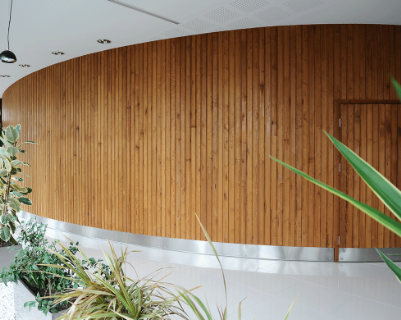
(Here is what your charred cladding SHOULD look like).


If you need support choosing the right timber for charring, don’t hesitate to contact us at Sales@qtdgroup.com.
Prefer to call? 0118 932 8596


Comments