
Can Bespoke And Customised Cladding Profiles Reduce Installation Costs?

At QTD Ltd, we're often asked:
"Does choosing a bespoke cladding profile increase costs, or can it actually save money during installation?"
It's a fair question. While custom-machined cladding profiles may have a higher upfront cost than standard profiles, they can often reduce the overall cost of a project by saving time, minimising waste, and simplifying installation.
Less Waste, Lower Costs
Labour is one of the largest costs associated with cladding installation. The longer a project takes, the higher the overall installation cost.
Faster Installation
Custom profiles can be designed with integrated shadow gaps, concealed fixing systems, or bespoke joint details that simplify installation and reduce time on site. The result is a faster, more efficient installation process and lower labour expenditure.
Built-In Performance = Fewer Call-Backs
A well-designed cladding system must manage ventilation, moisture, and timber movement effectively.
By incorporating these considerations into the profile design from the outset, bespoke cladding can improve long-term performance and reduce the likelihood of maintenance issues or costly remedial work in the future.
Precision = Cleaner Finish, No Rework
Accurate machining helps eliminate many of the challenges installers encounter on site.
Profiles manufactured to project-specific requirements ensure cleaner transitions, more consistent shadow lines, and improved alignment across elevations. This reduces the risk of installation errors and avoids time-consuming rework.
Reduced Need for Secondary Materials
Many bespoke profiles can reduce or eliminate the need for secondary materials such as trims, shadow-gap battens, metal angles, adhesives, and sealants.
Reducing the number of components required can simplify installation while lowering both material and labour costs.
What About Cost Per Board?
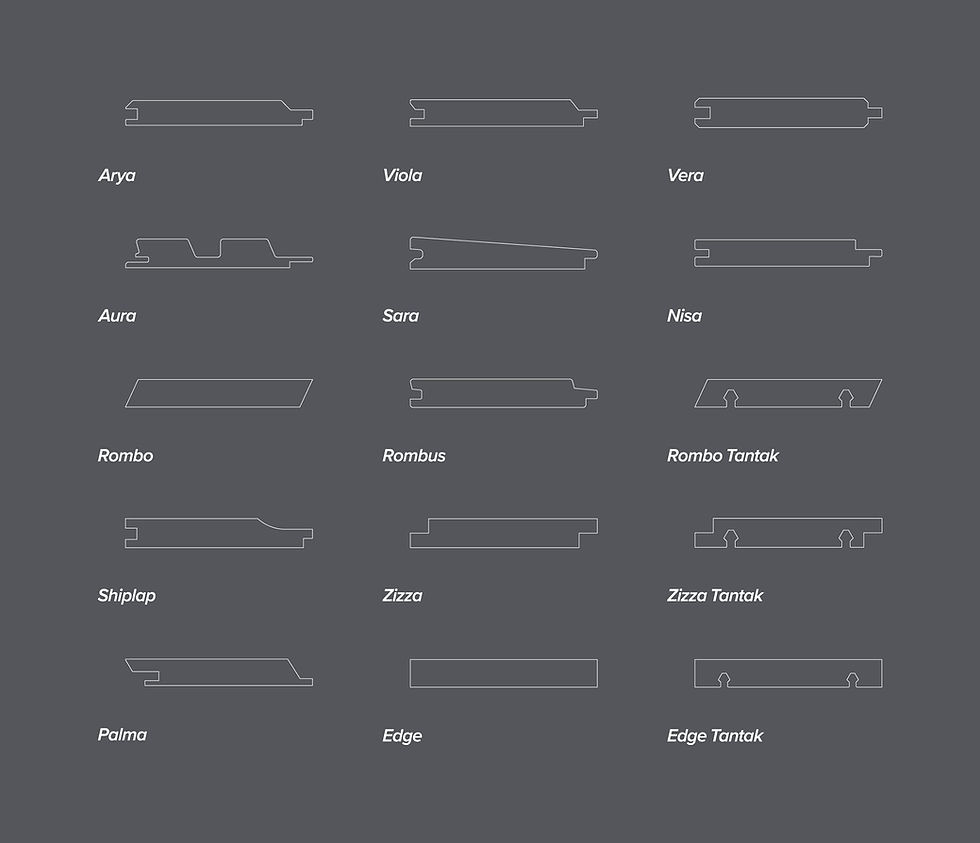
At QTD, we manufacture a range of wider-profile options, including our Vertical Nisa, Triple Nisa, and Quad Nisa shadow-gap profiles.
Available in widths of up to 141mm and 186mm, these profiles provide greater coverage per board. Fewer boards are required per square metre, which can significantly speed up installation and reduce labour requirements.
How QTD Ltd Makes it Easy
All of our cladding profiles are machined in-house, allowing us to work closely with architects, designers, contractors, and installers to develop solutions tailored to each project.
Whether you're specifying ThermoWood®, Fraké Noir, or another timber species, we can advise on profile design, joinery details, and pre-finished solutions that simplify installation while delivering outstanding visual results.

The Bottom Line
Bespoke cladding profiles aren't just about aesthetics. They can help reduce waste, improve installation efficiency, and lower overall project costs.
By considering profile design at the start of a project, it's often possible to achieve a better finish, faster installation, and greater long-term value.
If you're planning a cladding project, speak to the QTD team early. We'll help you develop a profile that works both visually and practically from day one.


Comments